
Drain Repairs & No-Dig Solutions Across Scotland
Envirotech provides professional drain repairs across Scotland for commercial properties, developments, infrastructure and residential drainage systems. We investigate damaged pipework, identify the cause and location of the defect and recommend a repair suited to the pipe condition, access and surrounding environment.
Choosing The Right Drain Repair Method
Drainage defects can result from ground movement, root ingress, deterioration, poor installation, displaced joints or accidental damage. The correct repair depends on the type and severity of the defect, the pipe material, diameter, access arrangements and condition of the surrounding pipework.
Before recommending any repair, Envirotech establishes what has failed and whether the remaining pipe is structurally suitable for rehabilitation. A localised patch may be appropriate for an isolated fracture, while more extensive deterioration could require full-length relining or excavation and replacement. UKSTT guidance on trenchless lining techniques provides further information on rehabilitation methods that can be used to repair drainage and sewer pipework without traditional open excavation.
Our objective is to provide a practical, proportionate repair that restores the drainage system while reducing unnecessary disruption, excavation and reinstatement costs wherever possible.
Drainage Defects We Repair
Our drain repair services can address a wide range of structural and operational problems, including:
- Fractured and cracked pipework
- Localised breaks and holes
- Displaced or open joints
- Root-damaged drainage
- Deformed or restricted pipes
- Failed or deteriorated previous repairs
- Intruding lateral connections
- Concrete, grout and hardened deposits
- Sections of pipework with repeated blockages
- Damaged manholes and inspection chambers
- Defective channels and benching
- Collapsed pipework
- Poorly installed connections
- Leaking drainage joints
- Sections requiring complete replacement
The available repair method will depend on the condition and accessibility of the drainage. Completely collapsed, severely deformed or unsuitable pipework may require excavation rather than a no-dig repair.
CCTV Investigation & Repair Planning
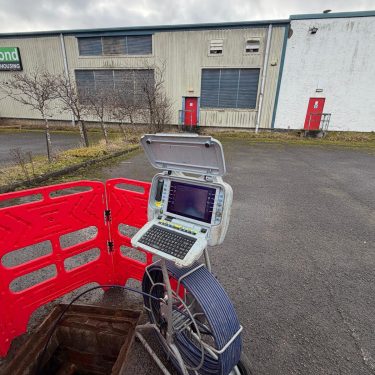
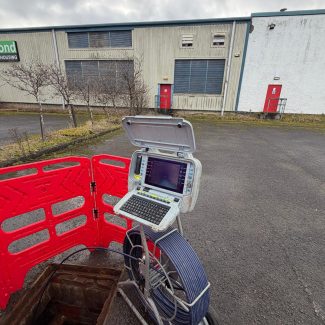
A repair should be based on evidence rather than assumptions. CCTV surveying allows the internal condition of the pipework to be inspected and helps establish the location, type and extent of the defect.
Before repair works begin, the drainage may be cleaned using high-pressure water jetting, mechanical descaling or root-cutting equipment so the pipe condition can be assessed properly. The survey findings are then reviewed to determine whether patch lining, relining, robotic cutting or excavation is appropriate.
Where required, sonde tracing and GNSS positioning can be used to locate the defect from the surface. This is particularly useful when excavation is required or when the route of the drainage is not clearly recorded.
A post repair CCTV inspection can then confirm that the repair has been installed correctly and that the drainage is clear and operational.
Localised No-Dig Patch Repairs
Patch lining is used to repair an isolated section of damaged pipework without excavating the full drainage route. It can be suitable for local fractures, open joints, small holes and limited areas of deterioration where the surrounding pipe remains structurally serviceable.
The damaged section is cleaned and prepared before a resin-impregnated repair material is positioned over the defect using specialist installation equipment. The repair is held in place while it cures, creating a strong internal sleeve across the damaged area.
Patch repairs can provide several benefits:
- Minimal excavation and surface disruption
- Targeted repair of an isolated defect
- Reduced reinstatement requirements
- Faster installation than traditional replacement in suitable conditions
- Improved structural integrity at the damaged section
- A smoother internal surface across the repaired area
Full Length Drain Relining
Where defects or deterioration extend along a greater length of pipework, full-length relining may provide a more suitable rehabilitation option.
A liner is installed through the existing drainage route and cured to form a new pipe within the original pipe. This can seal multiple fractures and joints while restoring continuity through the affected section.
Relining may be considered for:
- Repeated defects along one pipe length
- Deteriorated or leaking joints
- Multiple fractures
- Root-damaged sections following preparation
- Ageing pipework requiring rehabilitation
- Pipes located beneath buildings, roads or finished surfaces
Robotic Cutting & Root Removal
Specialist robotic and mechanical cutting equipment can be used to remove obstructions that cannot be cleared effectively through standard jetting.
Depending on the pipe size, condition and access, this can include:
- Intruding tree roots
- Hardened scale and deposits
- Concrete or grout ingress
- Protruding lateral connections
- Failed repair material
- Obstructions preventing CCTV access
- Material restricting the pipe diameter
- Connections requiring reopening following relining
Excavated Drain Repairs & Replacement
No-dig rehabilitation is not suitable for every defect. Severely collapsed, badly deformed, incorrectly graded or extensively damaged drainage may need to be excavated and replaced.
Before excavation, the affected pipe route and defect location are confirmed as accurately as possible. Existing utility information is reviewed and appropriate service-detection measures are completed before ground is broken.
Excavated repairs can include:
- Removing and replacing collapsed pipework
- Replacing damaged traps and connections
- Correcting displaced or poorly installed drainage
- Installing new access chambers
- Repairing defective manhole channels and benching
- Reconnecting existing drainage
- Replacing unsuitable pipe materials
- Correcting local alignment or gradient problems where practicable
Replacement pipework is installed with suitable bedding and surround before the excavation is backfilled and the surface reinstated to the agreed specification.
Commercial Drain Repairs
Envirotech supports drainage repairs for:
- Offices and commercial buildings
- Retail parks and shopping centres
- Warehouses and industrial premises
- Restaurants and hospitality venues
- Healthcare and public-sector properties
- Facilities-management portfolios
- Car parks and service yards
- Multi-building and multi-site estates
Works can be planned around site operations, access restrictions and client requirements. Out-of-hours attendance can be considered where repairs would otherwise affect customers, staff, traffic or business operations.
Development & Infrastructure Drainage Repairs
Existing drainage defects can affect construction programmes, proposed connections and long-term asset performance.
Our investigation and repair services can support:
- New developments
- Refurbishment projects
- Pre-construction remedial works
- Infrastructure upgrades
- Roads and external works
- Utility and drainage contractors
- Consultants and engineering teams
- Pre- and post-construction surveys
- Handover defect repairs
Where accurate location information is required, repair works can be supported by CCTV surveying, sonde tracing and GNSS drainage mapping.
Manhole & Drainage Chamber Repairs
Defective manholes and chambers can contribute to blockages, leakage, poor flow and unsafe access conditions.
Envirotech can investigate and repair defects affecting:
- Manhole channels
- Benching
- Chamber walls
- Pipe connections
- Inlets and outlets
- Damaged or unsuitable access chambers
- Localised leakage points
- Defective traps
- Covers and frames where included within the works
Where existing pipe arrangements are unusual, bespoke channel or benching details may be required to guide flow correctly through the chamber.
The repair scope will be based on the observed condition, intended use and accessibility of the chamber.
Our Drain Repair Process
- Investigation and Assessment- The reported problem, drainage history and available site information are reviewed. CCTV surveying, cleaning, sonde tracing or other investigations are completed where required to identify the defect.
- Repair Recommendation– The survey findings are assessed and the most appropriate repair method is recommended. Access, pipe condition, operational requirements and potential disruption are considered before the scope is agreed.
- Drainage Preparation– The affected pipework is cleaned and prepared. Roots, scale, debris or other obstructions may need to be removed before a no-dig repair can be installed.
- Repair Installation– The agreed patch, liner, robotic works or excavated repair is completed using equipment and materials suited to the drainage system and repair design.
- Testing and Verification- The drainage is flow-tested and, where required, a post-repair CCTV inspection is completed to verify the finished works.
- Reporting and Recommendations- Photographs, CCTV footage or repair records can be provided depending on the project requirements. Any remaining defects or recommended maintenance actions are clearly identified.
Why Choose Envirotech For Drain Repairs?
- CCTV investigation and defect identification
- Localised no-dig patch repairs
- Full-length relining options
- Robotic cutting and root removal
- Excavated drainage repairs
- Sonde tracing and defect location
- GNSS drainage mapping capability
- Pre & Post repair CCTV verification
- Commercial, development and residential experience
- Clear reporting and photographic evidence
- CHAS Elite accredited
- NADC member
Frequently Asked Questions
Is patch lining suitable for every damaged drain?
No. Patch lining is generally used for isolated defects where the surrounding pipe remains suitable. Collapsed, severely deformed or extensively damaged drainage may require relining or excavation.
What is the difference between patch lining and relining?
Patch lining repairs a limited section of pipework around a specific defect. Full-length relining creates a continuous internal liner through a longer section containing multiple defects or widespread deterioration.
How do you decide which repair is required?
The repair method is selected after reviewing the CCTV findings, pipe condition, defect type, diameter, access arrangements and surrounding environment.
Can you repair root damaged drains?
Roots can often be removed using specialist cutting equipment. The pipework is then inspected to determine whether patch lining, relining or excavation is needed to repair the entry point and surrounding damage.
Can every drain be repaired without excavation?
No. Excavation may still be required where the pipe is collapsed, severely deformed, incorrectly graded, inaccessible or unsuitable for internal rehabilitation.
Do you provide CCTV footage after the repair?
Post repair CCTV footage or reporting can be provided where included within the agreed project scope.
Can you carry out commercial repairs out of hours?
Planned out-of-hours works can be considered where repairs need to minimise disruption to customers, staff, traffic or site operations.
Do you provide drain repairs across Scotland?
Yes. Envirotech is based in Bathgate and provides planned drainage investigation and repair services throughout Scotland.
Drain Repairs & No-Dig Solutions Across Scotland
Based in Bathgate, West Lothian, Envirotech provides drainage repair assessments across Edinburgh, Glasgow, West Lothian, Lanarkshire, Stirlingshire, Midlothian, Fife and throughout Scotland.
Whether the issue involves a localised defect, root ingress, displaced pipework, structural damage or a recurring blockage, we can assess the affected drainage, identify the most suitable repair method and provide clear recommendations for the next stage of works.